Monday, January 21, 2019

Speaking Science - Talking to the public and legislators

Graphic recording by Amy Sparks of  A Visual Spark (1/17/2019)

After an introduction by U of Minnesota President, Eric Kaler, a faculty panel of Michael McAlpine Assoc. Prof. Mech. Eng.) , Jane Kirtley (Prof of Medical Ethics), and Kristina Krohn, MD (Assoc. Prof Med.) responded to questions posed by moderator Chris Cramer (V.P Research).

Panelists offered several recommendations to assist with clear communication of scientific discoveries.

  • Adjust the message to the audience.
  • Share the excitement of your research.
  • Establish credentials with rapport, humility, truth, and caring.
  • Repeat the same message in slightly different words.
  • Know the facts.
  • Know that reporters often focus on the negative.
When dealing with legislators, use anecdotes over data, establish relationships with the legislative staff, offer a message they can share, and admit when you don't know an answer to a question. 


Current issues facing journalists - Jane Kirtley - 8 min. 


Tissues and electronics in a 3D printed "bionic ear" - Michael McAlpine - 7 min. 

Speaking Science - Curiosity as a Catalyst by Emily Graslie

Graphic recording by Amy Sparks of  A Visual Spark (1/17/2019)

On January 17, 2018 Emily Graslie delivered the keynote address at the Speaking Science Conference at the University of Minnesota. Emily is the chief curiosity correspondent at the Field Museum of Natural History in Chicago, Illinois. She originally started as a landscape painter who fell in love with the objects in the zoological Museum at the University of Montana.

On a three day trip to the Field Museum of Chicago to film episodes for her Brain Scoop YouTube channel, the Field Museum staff offered her a job to work there.

Emily's advice to scientists is to identify your audience, use the language your audience uses, and modify the tone based on the audience. Brain Scoop made two separate videos on speciation. They produced the first video for a senior high school and freshman college audience. The second video used candy to represent species with middle school students as the target audience.


Candy Taxonomy - Emily Graslie presentation

Emily let her curiosity guide her career. She stepped out of her narrow role as an artist and moved into unexplored territory that gave her greater meaning.

Sample Science Scoop Videos below.


Meet Emily Graslie - Chief curiosity correspondent - Field Museum - 6 min.


Rodents of Unusual Size - 7 min. 


What is the Function? - an engineer attempts to guess the function of animal parts - 8 minutes


The Value of Curiosity - Emily Graslie - TED Talk - 13 minutes

Monday, December 17, 2018

Interesting Milk Dehydration Product


Dried milk - N. Carlson

At the bottom of a glass of milk that spent too much time in a bedroom this spongy object formed. It looks like a sunny side up egg.  It appears to consist of dehydrated milk solids.

Bottom side of dried milk - N. Carlson
The underside is hollowed out. I attempted to grow portions of the material on culture plates, TSA, DG-18 and MEA. The plates were placed in a 25C incubator. There was minimal growth on the plates other than yeast.


Monday, August 20, 2018

Ground Cherries

Ground cherries from U of MN farmers market - N. Carlson

Inside ground cherries from U of MN farmers market - N. Carlson

I purchased the ground cherries because I used to eat them when I was younger. As I was eating the cherries, I noticed two with dark spots on them. Tease tape samples were taken from the surface of the cherries and the inside of the outer cover. Both insects and Cladosporium spp. fungal growth were noted.

Insects on the Cherries 40x

Growth of Cladosporium spp. and insect part - 400x

Saturday, August 18, 2018

Minnesota Wildflowers

U of Minnesota - Near Civil and Mineral Engineering Building - N. Carlson

The University of Minnesota and regional park boards continue efforts to bring back native prairie grasses and flowers. The efforts appear to be successful based on the colorful flowers in the landscape and the wide variety of insect pollinators.

The spaces with the native grass also do not require weekly mowing, extensive watering and herbicides to keep the area free of weeds.

Male monarch butterfly in wildflowers by TCF Bank Stadium - N. Carlson
Efforts to bring back the population of monarch butterflies need more than milkweeds for the caterpillars.  The butterflies need nectar for energy and these flowering plants also need to be planted in the area.

Beetle and bee on wildflower at Silverwood Park in St. Anthony - click to enlarge - N. Carlson

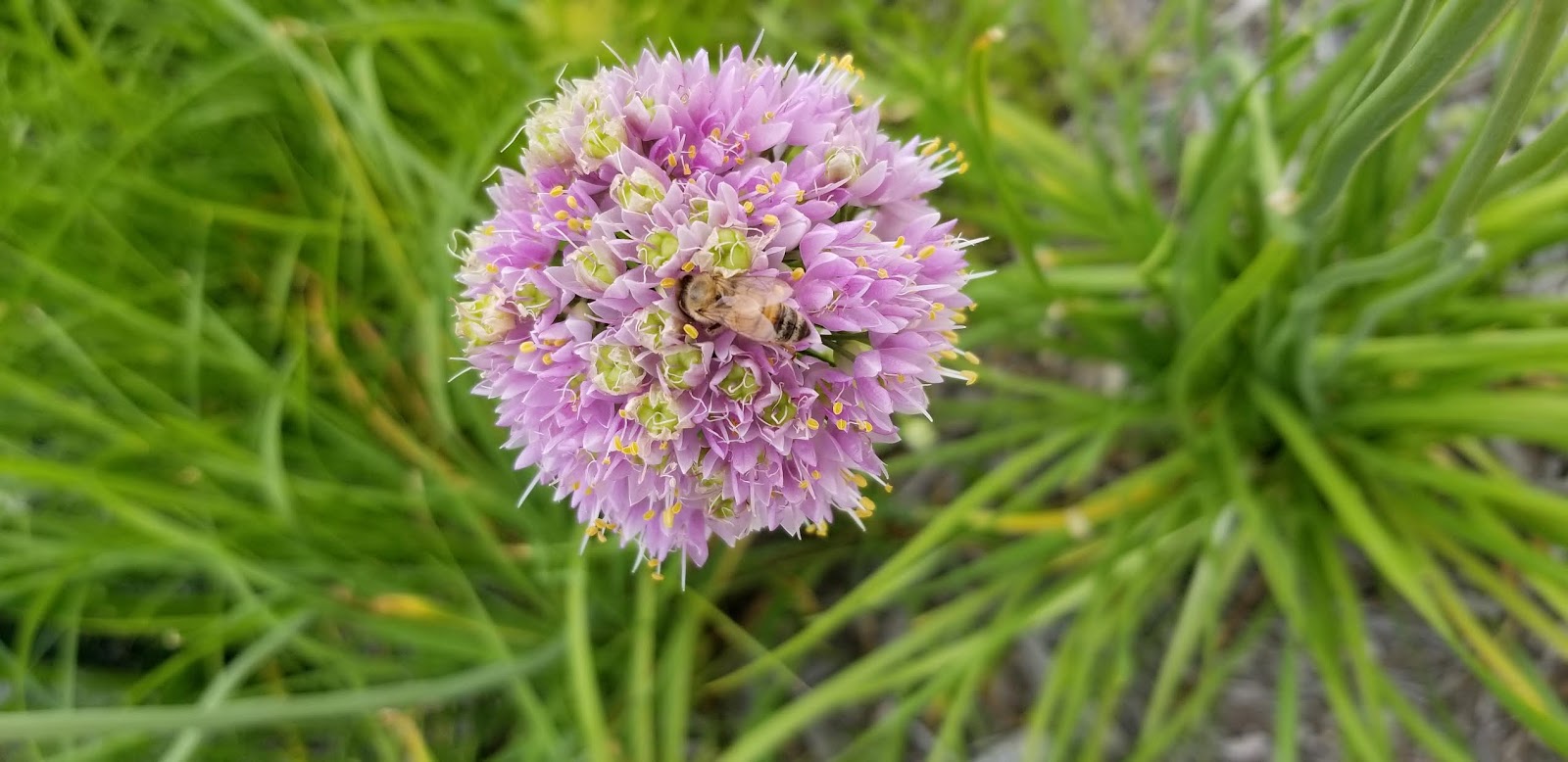
Honeybee on flower at the St. Paul Campus of the U of Minnesota - N. Carlson

Flowers also provide an excellent habitat for bees. At one planting outside McNamara Alumni Center five different types of bees were busy extracting nectar from the flowers.  I used some of these images in this book published in December of 2018. 


The paperback version of Fireworks, Flowers, Forests, and the Minnesota State Fair: Image Reflections from Minnesota is available from Amazon.  There is also a kindle version of Fireworks, Flowers, Forests, and the Minnesota State Fair: Image Reflections from Minnesota that is best viewed from a portrait orientation.

The video below uses some of the wildflower images from this the book.


Minnesota Wildflowers - Wildflowers Music by Tom Petty - 3 minutes14 seconds

Wednesday, August 8, 2018

Hearing Conservation for a Cheap Trick Concert

Cheap Trick at the North Dakota State Fair - July 26, 2018 - N. Carlson
Sound levels at rock concerts exceed the OSHA occupational exposure limit for noise exposure (90 dBA averaged over 8 hours).  As the effect of hearing loss is irreversible, it is prudent to bring along hearing protection to these concerts. At the Cheap Trick Concert the drum was heavily miked. The beats on the base drum felt like chest compressions for CPR.

Rick Nielsen and his special guitar. - N. Carlson
How loud is too loud? Average exposure above 85 dBA over eight hours requires hearing protection. Sound level meter apps on phones are fairly good but they are not calibrated. As a rule of thumb, if you are in an environment where it is difficult for you to hear your finger snap at arms length, it is prudent to wear hearing protection.  Many hearing protectors now come in metal cases that can be attached to a key chain. Some are also designed for better tone quality to hear music at concerts.


These Ear Peace ear plugs worked well with three colored inserts that provide varying levels of hearing protection. The metal key chain case  allows for the storage of the three ear pieces in one compartment and the inserts in another. 


The Flame - live-  Cheap Trick 1988


Tuesday, July 31, 2018

Black Raspberry Decomposition

Trichoderma spp. growth on hidden black raspberry - N. Carlson
Two Raspberries had a few small areas of mold growth several weeks ago. I placed the berries in a sealed container to my office and let the forces of natural decomposition take place.

Raspberries hiding under the fungal growth- N. Carlson

Trichoderma spp. 400x Samsung S-7 camera (Photoshop edit) - click to enlarge - N. Carlson
I occasionally find this organism growing on sheetrock. The primary colonizer of most of these fresh fruits in my refrigerator is usually Botrytis spp.   - Addio for now.


Monday, July 23, 2018

Green bacon

Green bacon inside biosafety cabinet - N.Carlson
These nitrate free bacon strips spent a little too much time in my refrigerator. It was time to identify the less than desirable furry addition. I took a tease tape sample with Lacto-Fuchsin stain and looked at it under 400x power Olympus microscope. I photographed it with a Samsung S-8 cell phone camera through the eye piece. The image was cropped and enhanced using Adobe Photoshop Elements 2018. The distance between the 1 and 2 on the scale is 25 microns.

Penicillium spp. at 400x N. Carlson

Monday, July 9, 2018

Cream cheese mold

Moldy cream cheese- N. Carlson
I lost the lid for my cream cheese container and put it inside cleaned sealed Cool Whip container.  I had forgotten it in the fridge for several weeks. I took it our to spread it on some crackers and ended up tossing it when I saw the mold growth. Before tossing it I tease taped the mold with clear Scotch Tape and examined it under the microscope at 400x power.

Growth of Cladosporium spp. at 400x - N. Carlson

Monday, July 2, 2018

Minnesota Public School Indoor air quality Training Fall 2018

Infrared photo of cold air door leak

School Indoor Air Quality Training

Public schools must have health and safety programs that comply with health, safety, and environmental regulations and best practices, including indoor air quality (IAQ) management. One best practice is that public schools have an IAQ Coordinator. This training will discuss the state’s best practices for school IAQ management. While there is no refresher training requirement, previous attendees are encouraged to attend (content changes every year). Non-public schools, service providers and other stakeholders are also encouraged to attend.

Dates
St. Cloud: September 20, 2018           10:00 am – 2:00 pm                   
Duluth: September 21, 2018               10:00 am – 2:00 pm                   
Marshall: October 2, 2018                  10:00 am – 2:00 pm
Roseville: October 10, 2018                  8:30 am – 12:00 pm                         
Webinar: October 30, 2018                  1:00 pm – 4:00 pm